Health and Safety Policy — Aldwych Cleaners
Policy Overview
 Aldwych Cleaners is committed to maintaining a safe and healthy working environment for employees, clients, contractors and visitors. This health and safety policy sets out the principles and practical measures that the Aldwych cleaning services team applies to every contract. The policy supports a proactive safety culture where risk prevention, safe working practices and continuous improvement are central. Safety and wellbeing are core values for the company, and this document outlines responsibilities, operational controls and monitoring arrangements designed to reduce harm and support resilient operations.
The scope of the policy covers all activities carried out by the Aldwych Cleaner team, including routine cleaning, specialist treatments, waste handling and the maintenance of cleaning equipment. Management will ensure that resources are allocated to training, personal protective equipment (PPE), and safe systems of work. Employees are expected to follow instructions, report hazards and take reasonable care of their own safety and that of others. The policy is designed to be practical and accessible so that supervisors and operatives can apply it day to day.
 Key principles that underpin the Aldwych commercial cleaners health and safety approach include:
- Prevention of injury and ill health through risk assessment and control;
- Provision of clear information, instruction and supervision for safe working;
- Engagement of staff in safety decisions and learning from incidents.
Risk Management, Training and Competence
All tasks performed by Aldwych cleaning services are subject to documented risk assessments that identify hazards and specify control measures. Assessments will be reviewed regularly and whenever work arrangements change. Control measures include elimination of unnecessary risks, substitution of hazardous substances where practicable, engineering controls, administrative controls and use of PPE. Managers will ensure that cleaning teams have access to appropriate equipment and that maintenance regimes are in place to keep tools and machines in safe condition.
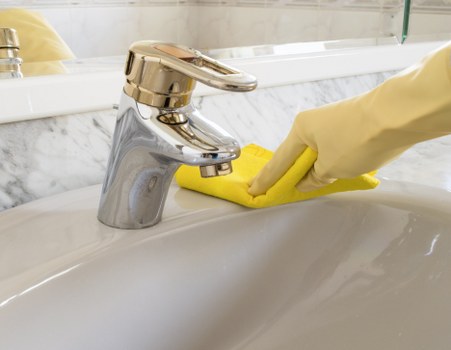 Training and competence are essential to delivering safe outcomes. New staff receive an induction that covers manual handling, safe use of cleaning chemicals, machinery operation and site-specific hazards. Ongoing training and refresher sessions are provided to maintain skills and awareness. Supervisors carry out competency checks and support staff development. Learning from near misses and incidents is shared to prevent recurrence, and the Aldwych Cleaner team promotes a culture where asking for clarification and seeking help is encouraged.
Specific attention is given to the safe handling and storage of cleaning products. The Aldwych Cleaners policy requires clear labelling, appropriate storage, and the use of manufacturer safety data where applicable. Where hazardous substances are used, control measures are documented and understood by those who handle them. The policy also emphasizes ergonomic practices to reduce repetitive strain and musculoskeletal injury among operatives.
Operational Controls, Incident Management and Review
Cleaning procedures are designed to minimise risk to staff and building occupants. Standard operating procedures cover wet floor management, working at height, confined spaces where relevant, electrical safety and the segregation of waste streams. Routine checks and pre-start inspections help identify defects before work commences. Communication between site managers and cleaning teams ensures that changing hazards are reported and controlled promptly. Environmental considerations, such as chemical disposal and resource efficiency, are incorporated into safe working arrangements.
Emergency Procedures and Reporting
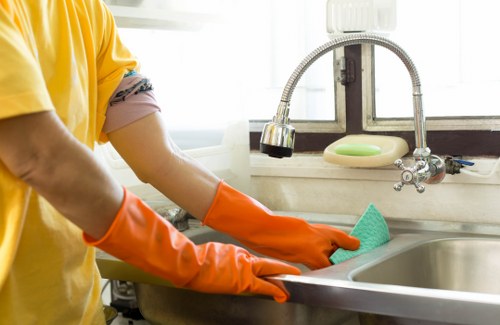 All personnel must be familiar with emergency procedures for fire, medical emergencies and other site-specific incidents. Incident reporting is straightforward and non-punitive: staff are expected to report accidents, near misses and unsafe conditions as soon as possible. Prompt reporting allows corrective actions to be taken and supports learning. First aid provision, assembly points and emergency contacts are identified at each site, and staff receive instruction on their location and use.
 Aldwych Cleaners pursues continuous improvement through routine monitoring, audits and review. Performance indicators include accident and incident rates, training completion, equipment checks and corrective action closure times. Management reviews the policy periodically to ensure it remains relevant and effective. Staff involvement is key to this process: regular briefings and toolbox talks ensure that practical lessons are shared across the team. The policy is supported by clear responsibilities at all levels, visible leadership, and an ongoing commitment to providing a safe, respectful workplace where health and safety are integral to how the Aldwych cleaning services operate.
Responsibilities are allocated to ensure accountability: senior management endorses the policy, site supervisors implement controls and employees follow safe systems of work and report hazards. Contractors and temporary staff are expected to comply with site arrangements and undergo necessary briefings. Regular communication and cooperative working between clients, site management and the Aldwych Cleaner team help maintain consistent standards across varied environments.
Monitoring and review encompass proactive inspections and reactive investigation. When incidents occur, they are investigated to identify root causes and appropriate remedies. Lessons learned result in changes to procedures, training or equipment as required. The Aldwych Cleaners health and safety policy is a living document: it is applied pragmatically and updated to reflect operational learning and evolving best practice, always prioritising the protection of people and property.
Implementation of this policy is a collective obligation and a measure of professionalism across the Aldwych commercial cleaning operation. Everyone has a role in making workplaces safer and healthier. By embedding these principles, procedures and behaviours the company assures clients and staff that health and safety is handled with diligence and respect.